
10 Stunning Decor Ideas for the Perfect Living Room
Most living rooms do not need more furniture. They need better decisions about what is already there. Interior designers rarely walk into a space and suggest starting over. More often they adjust the parts of the room that carry the most visual weight, the sofa, the lighting, the rug, the textiles, and the surfaces the eye lands on first. The right changes in the right places shift the whole room, and most of them cost far less than people expect.
The ten ideas below follow that logic. Each one is based on the kind of adjustments designers make when a living room feels flat, disconnected or slightly unfinished, even when all the basic furniture is already in place.
1. Refresh the Sofa Instead of Replacing It
The sofa holds more visual weight in a living room than almost anything else, which is why it is usually the first thing a designer looks at. If it feels too dark, too worn or stylistically out of step with the rest of the space, the whole room can start to feel heavier and less cohesive than it should. The instinct is often to style around it with more cushions or accessories, but if the sofa itself is what is throwing the room off, those details rarely solve the problem.
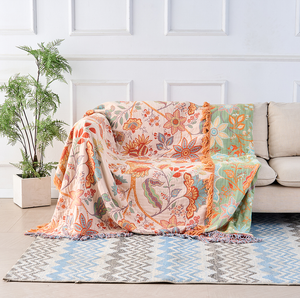
Interior designers often look for ways to update upholstery before suggesting anything more drastic. A textured cover can soften the look of a bulky sofa, brighten a room that feels weighed down by dark fabric, or help older furniture sit more naturally alongside a newer decorating direction. It is one of the more practical updates available because it changes the largest visible surface in the room without touching anything structural.

2. Add a Rug Large Enough to Anchor the Seating Area
One of the most common corrections designers make in a living room is rug size. A rug that is too small floats in the middle of the furniture instead of bringing the seating area together, and even when everything else is well chosen, the layout can still feel unsettled. This change affects the whole room at once, not because the rug is especially dramatic but because it helps furniture read as a complete arrangement rather than separate pieces placed near each other.
A properly scaled rug creates structure and tells the eye where the living area begins and ends. As a general rule designers want the rug to sit beneath at least the front legs of the sofa and chairs rather than floating completely free. That extra coverage is what gives the room a sense of grounding and, counterintuitively, makes the space feel more homely, not cramped.

3. Use Cushion Covers to Introduce Shape and Contrast
Cushions are perfect for adding character to a living room and surprisingly easy to get wrong. In many living rooms they end up looking like an afterthought, either because there are too many of them, too many unrelated colours, or not enough variation in size and texture to feel intentional. Designers approach cushions less as decoration and more as a way to refine the sofa visually, using them to soften edges, repeat tones already present in the room and introduce texture so the seating area feels layered rather than flat.
A good arrangement usually works better with some contrast in both scale and finish. One larger pair establishes structure, one smaller contrasting cushion breaks the symmetry slightly, and fabrics that relate to the room without matching too literally pull it together. They also make it easier to refine the room seasonally or stylistically without overcomplicating it.

4. Add a Throw Where the Room Needs Softness
Where cushions add shape and contrast, a throw blanket adds softness and movement, and the two work better together than either does alone. Designers use it specifically when a seating area feels too structured or hard-edged, introducing a relaxed quality that shifts the whole feel of the sofa and living room.
The choice of throw material also matters, and it is something designers make deliberately based on the style and the season. Cotton sits lighter against the sofa and works across every season without feeling too heavy for the room, while sherpa brings more visual weight and warmth that suits colder months particularly well. A throw folded once and placed over one arm of the sofa, or lightly laid across one corner, gives the space an immediate lift.

5. Hang Curtains High and Wide
Most people hang curtains at window height, which keeps the eye at the level of the window frame and makes the ceiling feel lower than it is. Designers almost always hang curtains as close to the ceiling as possible and extend the rod well beyond the window frame on both sides. The curtain covers part of the wall rather than just the window, and the effect is a room that feels taller and more open without needing to change a single piece of furniture.
Floor to ceiling curtains are the best version of this approach. They draw the eye upward across the full height of the wall, which exaggerates the ceiling height and gives the room a sense of scale. Extending the rod past the window frame on each side also means the curtain panels sit against the wall when open rather than blocking the glass, keeping the room bright while making the window itself appear significantly wider than it is.

6. Replace Harsh Overhead Lighting with Layered Lamps
Lighting can truly transform a living room, from how colours read and textures show up to whether the room feels inviting or not once the sun goes down. This is why designers rarely rely on ceiling lights alone to get the aesthetic and feel their clients are looking for.
A floor lamp near the sofa for ambient light, a table lamp on a side table to soften darker corners, and warmer bulbs that make textiles and wood tones feel richer. The style of the lamp itself also contributes to the room's character. Designers love adding a rattan table lamp to suit neutral and earthy palettes and mushroom lamp for more sculptural quality that works particularly well in modern and Scandinavian-influenced spaces. These lamps are often more valuable than a purely decorative object because they act as both decor and lighting in one.

7. Introduce a Signature Artwork or Statement Wall
A well-chosen piece of art or a subtle statement wall can instantly give a living room personality and a sense of cohesion. Designers often pick one focal piece, such as a large painting, framed photography, or textured wall installation, and ensure it complements the room’s palette, textures, and style. The key is not size alone, it is about placement and proportion. Centering the artwork above the sofa or along a main wall draws the eye naturally, creating a sense of balance without overwhelming the space.
Even small tweaks, like aligning the artwork with other elements such as the rug, lighting, or where the wall color subtly enhances the piece, can elevate the entire room. This approach turns a flat or generic space into one that feels curated, considered, and uniquely finished, exactly what distinguishes a designer’s touch from casual decorating.

8. Style the Coffee Table to Give It Character
Coffee tables tend to reveal whether a living room has been properly finished or not. Left completely empty they make the room feel sparse and temporary. Overloaded they make it feel cluttered. Designers treat the coffee table as a curated surface that introduces personality and reinforces the room’s style.
Effective styling usually comes from mixing a few different types of objects so the arrangement feels balanced without being too deliberate. One or two carefully chosen books add structure, and unique sculptural objects introduce height and character. The most important part is restraint. Leaving enough open surface for the table to breathe ensures it remains functional while subtly reinforcing the tones and materials already established in the room.

9. Use a Candle Cluster to Enhance Flat Surfaces
Bare shelves and mantels are a common reason a living room can feel unfinished, yet one of the simplest things to fix. Designers often use a cluster of candles and holders in varying heights to create a focal point, adding visual interest, warmth, and a sense of intention.
The key is treating the cluster as a single composition rather than individual pieces. Grouping three holders of different heights within a tight footprint reads as a deliberate styling choice, while spreading them across a shelf feels disconnected. Designers often vary textures, finishes, or subtle colors to add extra depth, ensuring the arrangement complements the room’s palette and overall style.

10. Add Artificial Plants for Low Maintenance Colour
Modern faux plants, like sleek potted eucalyptus, are a designer’s secret for adding greenery and subtle colour without the need for upkeep. These pieces introduce vertical interest and visual weight, helping to fill awkward corners or balance the proportions of a seating area. The sculptural shapes also bring movement and texture, making a room feel thoughtfully composed.
Designers often position taller artificial plants behind furniture, next to shelving units, or near entry points to draw the eye upward and create a sense of scale. Smaller artificial plant decor can be tucked onto consoles or low shelves to break up flat surfaces. Placed strategically, they can really soften the room and help it feel more balanced and complete.

Final Thoughts
The best living room updates are intentional. Interior designers focus on the pieces and surfaces that carry the most visual weight, such as the sofa, lighting, rug, textiles, and key surfaces. Every adjustment, from a throw to a sculptural object, is made with purpose so the room reads as cohesive and considered.
Small, deliberate changes can have a big impact. Prioritize the elements that influence the eye first to achieve the perfect living room feel. Thoughtful decisions in the right places make the space balanced, polished, and finished while keeping it inviting, harmonious, and unmistakably styled.


