
Best Non-Slip Shower Mats: How to Choose the Safest Option
Buying a non-slip shower mat is one of the simplest ways of making your home safer and more comfortable. It is a household essential, especially for families with children, seniors, pregnant women, or anyone seeking extra stability on wet surfaces. Because bathroom floors can get slippery within seconds, a reliable shower safety mat helps reduce the risk of slips and falls.
If you’re wondering how to choose the best non-slip shower mat, the key is understanding what keeps it securely in place, what makes it safe, and what feels comfortable to you. Not all mats provide the same level of grip, and some can still shift or slide if they’re not designed properly. Once you know what to look for, it’s easy to find a shower mat that offers both stability and comfort. Whether you’re upgrading your bathroom or replacing an old mat, choosing the right option can make a noticeable difference in everyday use.
What Makes a Shower Mat Truly Non-Slip?
Not all shower mats labeled “non-slip” actually perform the same. The level of grip depends on a combination of design features that work together to keep the mat stable on wet surfaces.
One of the most important factors is the type of grip. Many shower mats use suction cups on the underside, which can create a strong hold on smooth surfaces like tiles or acrylic tubs. Others rely on anti-slip rubber backing, which provides consistent friction without the need for suction. Both options can be effective, but it’s important to decide based on the type of surface the mat will be on.
Texture also plays a role. A slightly raised or patterned surface helps create traction under your feet, reducing the chance of slipping when the mat is wet. Smooth or flat surfaces tend to be less effective.
Another factor is weight and stability. Lightweight mats are more likely to shift and move during use, while heavier ones tend to stay in place.
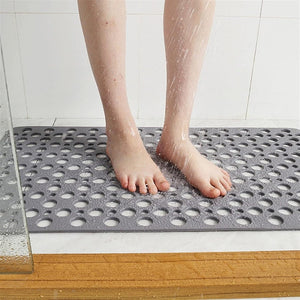
Finally, drainage is often overlooked but essential. Mats with built-in holes or breathable structures allow water to flow through instead of pooling on the surface. This prevents the mat from losing its grip and also helps prevent mold, mildew, and unpleasant odors over time.
Why a Non-Slip Shower Mat Is Essential for Bathroom Safety
Bathrooms are one of the most common places where people slip and fall, mainly because of constant moisture and smooth surfaces. Even a small amount of water in the shower or bathtub can create a slippery layer that increases the risk of accidents.
A non-slip shower mat adds an extra layer of protection by improving traction underfoot. Unlike standard bath mats placed outside the shower (which should also have non-slip properties for total safety), a dedicated shower mat is specifically designed to perform in wet conditions, where grip matters the most. Beyond safety, a quality shower mat also improves comfort. Standing on a slightly cushioned, textured surface feels more stable and pleasant compared to a hard, cold, and slippery shower or bathtub.
| Feature | What to Look For | Why It Matters |
|---|---|---|
| Material | Rubber/PVC for wet areas; fabric for comfort | Balances safety inside and comfort outside the shower |
| Grip Type | Suction cups (for smooth surfaces) or anti-slip backing | Keeps the mat securely in place |
| Size | Optimal fit for your standing area | Minimizes slippery gaps where you step most often |
| Drainage | Built-in holes or breathable design | Prevents water pooling and slipping; maintains hygiene |
| Texture | Lightly textured or cushioned surface | Provides essential traction and a pleasant feel underfoot |
| Maintenance | Easy to rinse or machine washable | Keeps grip effective and surface clean for longer |
How to Choose the Best Non-Slip Shower Mat
Material (Rubber, PVC, Fabric, Bamboo)
The material of your shower mat directly affects the feel, durability, grip, and how safe the mat is. Rubber and PVC mats are among the most common materials for non-slip shower mats, as they naturally provide water resistance and strong traction, making them the most reliable choice for use directly inside the tub or shower. Rubber provides excellent natural traction and is highly durable, while PVC is lightweight, affordable, and often treated to be mold-resistant.
Fabric mats, on the other hand, are usually softer and more absorbent, making them better suited for just outside the shower. Some designs combine comfort with non-slip backing, which might be ideal for some users, but overall they might not perform best in fully wet conditions where a shower safety mat needs to maintain a firm grip on the floor.
Bamboo or wooden-style mats offer a more elevated, spa-like look and are typically used outside the shower area. While they don’t rely on suction, their structure allows water to drain away quickly, helping reduce surface moisture and keeping your bathroom floor drier and safer.
Grip Type (Suction vs. Anti-Slip Backing)
The type of grip a non-slip shower mat has is one of the most important things to consider. Suction cups create a firm hold by attaching directly to smooth surfaces like tiles or acrylic tubs. When used correctly on a clean, dry, and flat surface, they provide excellent stability. However, suction cups often struggle to adhere to textured or refinished tub surfaces, which is where many users run into issues.
Anti-slip backing works differently by increasing friction between the mat and the floor. This option is often easier to use, as it doesn’t require a perfectly smooth surface or suction, making it a great alternative for textured surfaces. While it may offer slightly less hold in very wet, high-pressure environments compared to suction, choosing between these two depends on your specific shower floor and how much grip you need for daily safety.
Size and Coverage
Choosing the right size of a shower mat helps reduce the risk of slipping and falling. Usually, the best non-slip shower mats are those that provide sufficient coverage for the area where you stand and move the most.
This ensures that you always have a secure surface underfoot during your routine. Always make sure you measure your shower or bathtub before buying and choose a size that provides an optimal fit for your space. Even if the mat doesn't cover every inch of the floor, positioning it correctly helps minimize gaps and reduces the risk of stepping on uncovered, slippery surfaces.
Drainage and Water Flow
Proper drainage is essential for both safety and hygiene. Shower mats with drainage holes or breathable structures let water pass through instead of collecting it on the surface. This reduces the risk of slipping and helps the mat dry much quicker after every use.
If a shower mat doesn’t allow for the water to flow easily, it increases the slipping hazard by allowing water to pool both on top of and underneath the mat, which can cause it to lose its grip. There’s also a long-term risk: as the mat doesn’t dry properly, it can quickly develop mold, mildew, and unpleasant odors.
Comfort and Texture
While safety is a priority, comfort should also be considered. Cushioned mats or textured surfaces tend to make standing in the shower more pleasant, providing a sense of stability underfoot.
Some mats have surfaces that are too rough or abrasive – while that might mean the grip is better, standing on them can become very unpleasant over time. On the other hand, if a shower mat is too smooth, it can reduce traction and increase the slipping hazard, even if it feels soft. The goal is to find a balance where the mat provides enough texture to keep you safe without sacrificing comfort.
Ease of Cleaning and Maintenance
The best non-slip shower mat should be easy to clean. Some mats are machine washable, while others are even easier to maintain – requiring only a quick rinse and air-drying after use. Regular cleaning is important because it helps preserve the grip by removing soap scum and body oils that can make the surface slippery over time. Choosing a low-maintenance option makes it much easier to keep your bathroom both safe and hygienic.
Which Non-Slip Shower Mat Is Right for You?
The overall best non-slip shower mat should be chosen based on the criteria above. But the right one for you ultimately depends on who will be using it and how.
For households with children or pregnant women, mats with strong suction and full coverage provide the extra stability and safety. Elderly users may prefer slightly cushioned surfaces that offer a firm grip while being easy to maintain, ensuring both safety and comfort without extra effort.
For minimalist homes that favor a clean, simple, and modern bathroom look, structured or minimal designs with subtle textures can offer both style and safety. If you prefer a low-maintenance routine, choosing a mat that is machine washable or easy to rinse and air-dry will make the biggest difference in your daily life over time.
How to Keep Your Shower Mat Non-Slip Over Time
Even the best non-slip shower mat can lose its grip over time, especially if not properly maintained. The first step in ensuring your mat stays effective is regular cleaning. Because it is used daily, soap residue, body oils, and mineral buildup can quickly accumulate and reduce traction. Rinsing your mat after every use and giving it a deeper clean every couple of weeks is essential to maintaining its non-slip properties.
It’s also important to let the mat dry properly. Leaving it damp, folded, or in a poorly ventilated space can lead to mold or mildew, which not only affects hygiene but can also weaken the material over time. Hanging the mat over the edge of the tub or on a towel rack allows for better airflow and much faster drying.
If your mat uses suction cups, reposition them from time to time. This helps maintain a strong seal and prevents moisture from being trapped underneath. Always remember to apply suction mats to a clean, smooth surface to ensure the best possible hold.
Finally, know when it’s time for a replacement. If your shower safety mat starts to lose its grip, curl at the edges, or show visible wear, it is no longer safe to use, and it’s time to invest in a new one.
Conclusion: Choose a Shower Mat That Actually Prevents Slips
Investing in a non-slip shower mat is one of the best ways to improve bathroom safety without having to make major changes. By choosing a mat based on its size, material, grip type, and drainage, you can find a reliable option that protects you and your family every day.
Even seemingly small details, like ease of maintenance and surface texture, can make a big difference in the long run. With the right shower safety mat and a bit of regular care, you can significantly reduce the risk of slips while keeping your bathroom clean, comfortable, and safe for everyday use.


