
Cómo elegir y cuidar las alfombrillas de baño
Una alfombrilla de baño ayuda a mantener los pisos del baño más secos, seguros y cómodos al pisar. Sin embargo, debido a que está expuesta regularmente a la humedad, también necesita el material adecuado, una colocación correcta y una rutina de limpieza para mantenerse fresca e higiénica.
Las alfombrillas de baño y las alfombrillas de ducha están diseñadas para propósitos ligeramente diferentes, y no todos los materiales reaccionan igual al agua. Algunas absorben la humedad después de un baño o ducha, mientras que otras están diseñadas para proporcionar agarre dentro de la ducha misma.
Las respuestas a continuación explican cómo distinguir entre ambas, elegir una opción higiénica y cuidar adecuadamente tu alfombrilla de baño.
¿Cuál es la diferencia entre una alfombrilla de baño y una alfombrilla de ducha?
La principal diferencia es dónde está diseñada para usarse la alfombrilla.
Una alfombrilla de baño generalmente se coloca fuera de la bañera o ducha. Su propósito es:
- Absorber el agua de los pies mojados
- Ayudar a mantener el piso del baño seco
- Proporcionar una superficie suave para pisar
- Agregar color o textura a la habitación
Las alfombrillas de baño suelen estar hechas de materiales como algodón, microfibra, chenilla o fibras sintéticas tipo plush. Muchas tienen un respaldo antideslizante para ayudar a reducir el movimiento en pisos lisos del baño.
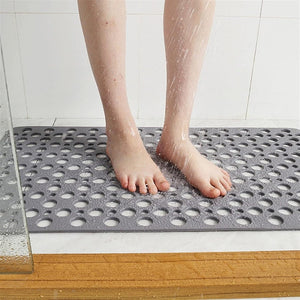
Una alfombrilla de ducha está diseñada para usarse dentro de la ducha o bañera. Generalmente está hecha de materiales resistentes al agua como goma, PVC o TPE y puede incluir orificios de drenaje, superficies texturizadas o ventosas.
Su propósito principal es mejorar el agarre en una superficie mojada en lugar de absorber agua.
Como los dos productos cumplen funciones diferentes, no se debe usar uno automáticamente en lugar del otro. Una alfombrilla de tela colocada dentro de la ducha puede empaparse y volverse resbaladiza, mientras que una alfombrilla de ducha de goma colocada fuera de la ducha puede no absorber el agua eficazmente.
La colección de alfombrillas de baño y ducha de Casa & Beyond incluye opciones para usar fuera de la bañera o ducha, así como diseños destinados a mejorar el agarre en áreas húmedas.
¿Qué tipo de alfombrilla de baño es la más higiénica?
La alfombrilla de baño más higiénica es aquella que se seca rápidamente, puede limpiarse regularmente y no retiene humedad por largos períodos.
Ningún material permanece higiénico sin el cuidado adecuado, pero algunas características hacen que una alfombrilla de baño sea más fácil de mantener fresca:
- Fibras de secado rápido
- Buen flujo de aire a través del material
- Construcción lavable a máquina
- Una superficie que libere fácilmente la suciedad y el pelo
- Un respaldo que pueda limpiarse y secarse completamente
- Resistencia a la humedad prolongada
Las alfombrillas de baño de algodón son absorbentes y a menudo lavables a máquina, pero el algodón grueso puede tardar más en secarse. La microfibra y algunos materiales sintéticos tienden a secarse más rápido, lo que puede ayudar a reducir el tiempo que la alfombrilla permanece húmeda.
Las alfombrillas de superficie dura hechas de materiales como la tierra de diatomeas pueden secarse rápidamente y pueden retener menos humedad que las alfombrillas de tela gruesa. Sin embargo, aún necesitan limpiarse según las instrucciones del fabricante.
Para usar dentro de una ducha, una alfombrilla con orificios de drenaje y una superficie antibacteriana o fácil de limpiar puede ser más higiénica que una que permita que el agua quede atrapada debajo. La gama de alfombrillas de ducha de Casa & Beyond incluye diseños pensados para drenar eficientemente y reducir la acumulación de humedad.
Cualquiera que sea el tipo que elija, cuélguela o colóquela de modo que tanto la parte superior como la inferior puedan secarse entre usos. Incluso una alfombrilla de secado rápido puede desarrollar olores o moho si permanece doblada, amontonada o presionada contra un suelo mojado.
¿Cómo limpiar alfombrillas de baño?
Siempre revise la etiqueta de cuidado antes de limpiar una alfombrilla de baño. El método correcto dependerá del material de la superficie, el respaldo y la construcción.
Para una alfombrilla de baño de tela lavable a máquina:
- Sacuda la alfombrilla al aire libre para eliminar polvo, cabello y residuos sueltos.
- Aspírela si es necesario, especialmente si las fibras son gruesas.
- Revise la etiqueta de cuidado para conocer la temperatura de agua recomendada.
- Trate las manchas visibles con un limpiador de telas adecuado.
- Lave la alfombrilla por separado o con textiles de baño similares.
- Use un detergente suave.
- Seleccione un ciclo suave o estándar, según las instrucciones.
- Enjuague bien para eliminar los residuos de detergente.
- Séquelo completamente antes de volver a colocarlo en el suelo.
Evite usar detergente en exceso, ya que el residuo puede quedar en las fibras y reducir la absorción. La lejía solo debe usarse si la etiqueta de cuidado lo permite específicamente.
Las alfombrillas con respaldo de goma, látex o antideslizante pueden requerir agua más fría y un tratamiento más suave. El calor alto puede hacer que algunos respaldos se agrieten, deformen o se separen de la tela.
Para alfombrillas duras, limpie o enjuague la superficie con un limpiador adecuado y deje secar ambos lados. Las alfombrillas de ducha con ventosas también deben levantarse regularmente para limpiar la parte inferior y el suelo debajo.
No olvide limpiar el suelo del baño antes de volver a colocar la alfombrilla. Colocar una alfombrilla limpia sobre una superficie polvorienta o húmeda puede ensuciarla rápidamente.
¿Cómo secar correctamente una alfombrilla de baño?
Una alfombrilla de baño debe secarse completamente después de lavarla y tener la oportunidad de airearse entre usos diarios.
Después de cada baño o ducha:
- Cuelgue la alfombrilla sobre una barra, el borde de la bañera o un tendedero
- Extiéndala completamente en lugar de dejarla doblada
- Asegúrese de que el aire pueda llegar a la parte inferior
- Ventile el baño abriendo una ventana o usando un extractor
- Evite dejarla en un suelo mojado
Después de lavar, siga la etiqueta de cuidado. Algunas alfombrillas de baño de tela se pueden secar en secadora a baja temperatura, mientras que otras deben secarse al aire.
El calor alto puede dañar la base de goma o látex, causar encogimiento o afectar la forma de la alfombrilla. En caso de duda, secar al aire suele ser la opción más segura.
Para secar al aire una alfombrilla de baño:
- Reforméla suavemente después del lavado.
- Cuelgue la alfombrilla de manera uniforme sobre un tendedero resistente.
- Evite doblarla sobre sí misma en varias capas.
- Gírela durante el secado si un lado permanece húmedo.
- Espere hasta que las fibras y la base estén completamente secas antes de usarla.
Secar la alfombrilla al aire libre puede ayudar, pero la exposición prolongada a la luz solar fuerte puede desteñir algunos colores o debilitar ciertas bases. Siga las instrucciones del producto y evite dejarla afuera más tiempo del necesario.
Una alfombrilla que se siente seca en la parte superior puede estar aún húmeda debajo, especialmente si tiene fibras gruesas o una base antideslizante. Revise ambos lados antes de devolverla al baño.
¿Con qué frecuencia debe lavar las alfombrillas de baño?
Para la mayoría de los hogares, las alfombrillas de baño deben lavarse aproximadamente una vez por semana. Sin embargo, la frecuencia ideal depende de la frecuencia de uso del baño y de qué tan rápido se seca la alfombrilla.
Puede ser necesario lavar con más frecuencia cuando:
- Varias personas usan el mismo baño
- La alfombrilla permanece húmeda por largos períodos
- El baño tiene mala ventilación
- Niños o mascotas la pisan regularmente
- Se usan zapatos en el baño
- La alfombrilla desarrolla manchas u olores visibles
- Alguien en el hogar está enfermo
Una alfombrilla de baño para invitados usada ligeramente puede no necesitar lavado semanal, mientras que una alfombrilla usada varias veces al día puede necesitar limpieza cada pocos días.
Las señales de que una alfombrilla de baño necesita lavado incluyen:
- Olor a humedad
- Fibras aplastadas o pegajosas
- Suciedad visible o decoloración
- Cabello y residuos atrapados en la superficie
- Sensación de humedad mucho tiempo después de su uso
- Marcas o residuos en la parte inferior
Las alfombrillas de ducha usadas dentro de la bañera o ducha deben enjuagarse y levantarse regularmente, con una limpieza más profunda al menos semanalmente o según las instrucciones del producto. El agua y los residuos de jabón pueden acumularse debajo, incluso cuando la parte superior parece limpia.
Tener dos alfombrillas de baño en rotación facilita mantener una en uso mientras la otra se lava y seca.
¿Con qué frecuencia debe reemplazar las alfombrillas de baño?
No es necesario reemplazar una alfombrilla de baño según un calendario fijo si permanece limpia, absorbente y estructuralmente intacta. Sin embargo, muchas alfombrillas eventualmente necesitan ser reemplazadas porque la humedad repetida y el lavado afectan las fibras o la base.
Considere reemplazar una alfombrilla de baño cuando:
- La base antideslizante está agrietada, se despega o ya no se adhiere
- La alfombrilla permanece húmeda durante períodos inusualmente largos
- Los olores persistentes permanecen después del lavado
- No se puede eliminar completamente el moho o la humedad
- Las fibras se han aplastado o desgastado mucho
- Los bordes están deshilachados o dañados
- La alfombrilla ha perdido gran parte de su capacidad de absorción
- Las manchas permanecen a pesar de una limpieza adecuada
Es especialmente importante atender un respaldo antideslizante desgastado porque la alfombrilla puede deslizarse sobre un suelo liso.
La duración de una alfombrilla de baño depende de su material, construcción, frecuencia de lavado y nivel de uso. Alternar entre dos alfombrillas y seguir las instrucciones de cuidado puede ayudar a prolongar su vida útil.
No conserve una alfombrilla de baño dañada solo porque la parte superior aún se vea aceptable. El estado de la parte inferior es igualmente importante para la higiene y la seguridad.
Si su alfombrilla de baño o ducha ya no proporciona un agarre confiable, reemplácela rápidamente y explore la colección de seguridad para ducha y baño de Casa & Beyond para productos adicionales diseñados para apoyar un movimiento más seguro en áreas húmedas.
¿Dónde comprar alfombrillas de baño?
Las alfombrillas de baño están disponibles en tiendas de artículos para el hogar, grandes almacenes, especialistas en baños y minoristas en línea.
Antes de comprar una, considere:
- Dónde se colocará la alfombrilla
- Si necesita absorción o agarre dentro de la ducha
- Las dimensiones del espacio disponible en el suelo
- Tiempo de secado
- Requisitos de lavado y cuidado
- El tipo de respaldo antideslizante
- Color y diseño
- Ya sea que el baño sea usado por niños o adultos mayores
Las descripciones de los productos deben distinguir claramente entre una alfombrilla de baño destinada al suelo y una alfombrilla de ducha destinada a superficies internas mojadas.
Para ayudarle a elegir una opción segura para usar dentro de la bañera o ducha, lea nuestra guía sobre las mejores alfombrillas antideslizantes para ducha, incluyendo qué buscar en términos de agarre, drenaje, material y cobertura.
La alfombrilla de baño adecuada debe adaptarse al espacio, secarse eficientemente y ser fácil de limpiar. Revisar el material, el respaldo y las instrucciones de cuidado antes de comprar le ayudará a elegir una opción que se mantenga práctica y fresca con el uso regular.
Para una cobertura de suelo de baño más grande o decorativa, explore las alfombras de baño de Casa & Beyond junto con la colección de alfombrillas de baño.
Related Articles


Explorar alfombras de baño


